
EU Packaging & Packaging Waste Regulation (PPWR)
27 Länder. Eine PPWR-Verordnung.
Kein Platz für fragmentierte Daten.
Die PPWR ersetzt 27 unterschiedliche nationale Verpackungsgesetze durch eine einzige, unmittelbar geltende Verordnung. Verpackungsabfälle machen 36 % des gesamten kommunalen Abfallaufkommens in der EU aus, und die bisherige Richtlinie konnte dieses Wachstum nicht stoppen. Die neue Verordnung führt von Beginn an in allen 27 EU-Mitgliedstaaten dieselben präzisen Anforderungen, Stoffgrenzwerte, Recyclingfähigkeitsklassen und Rezyklatquoten ein. Ab dem 12. August 2026 sind zudem eine technische Dokumentation gemäß Anhang VII sowie eine EU-Konformitätserklärung verpflichtend. Die Aufbewahrungsfrist beträgt je nach Verpackungsart fünf bis zehn Jahre. Es reicht nicht aus, compliant zu sein – Sie müssen Ihre Konformität jederzeit nachweisen können.
Für die meisten Unternehmen besteht die Herausforderung nicht darin zu verstehen, was die PPWR verlangt. Die eigentliche Herausforderung liegt darin, die erforderlichen Daten zu sammeln, zu validieren und strukturiert bereitzustellen. Lieferantenerklärungen sind verstreut, Stoffprüfungen erfolgen manuell und Compliance-Nachweise liegen in E-Mail-Postfächern und gemeinsam genutzten Laufwerken.
CDX macht Ihre PPWR-Compliance-Daten nachvollziehbar, strukturiert und jederzeit auditbereit.
Warum das jetzt wichtig ist
- Der Marktzugang steht auf dem Spiel. Nicht konforme Verpackungen dürfen nicht auf dem EU-Markt in Verkehr gebracht werden.
- Ihre Lieferanten sind Teil Ihrer Compliance. Für Konformitätsbewertungen und technische Dokumentationen sind Sie auf die Daten Ihrer Lieferanten angewiesen.
- PPWR-Compliance schafft die Grundlage für weitere regulatorische Anforderungen. Die für die PPWR erhobenen Material- und Stoffdaten unterstützen zugleich REACH-, SCIP-, RoHS- und ESG-Berichtspflichten.
- Das Verpackungsdesign beeinflusst die Compliance-Kosten. Gebühren im Rahmen der Erweiterten Herstellerverantwortung (EPR) orientieren sich zunehmend an Recyclingfähigkeit und Rezyklatanteil.
- Die Durchsetzung erfolgt EU-weit und koordiniert. Festgestellte Verstöße können Auswirkungen auf den Zugang zum gesamten europäischen Markt haben.
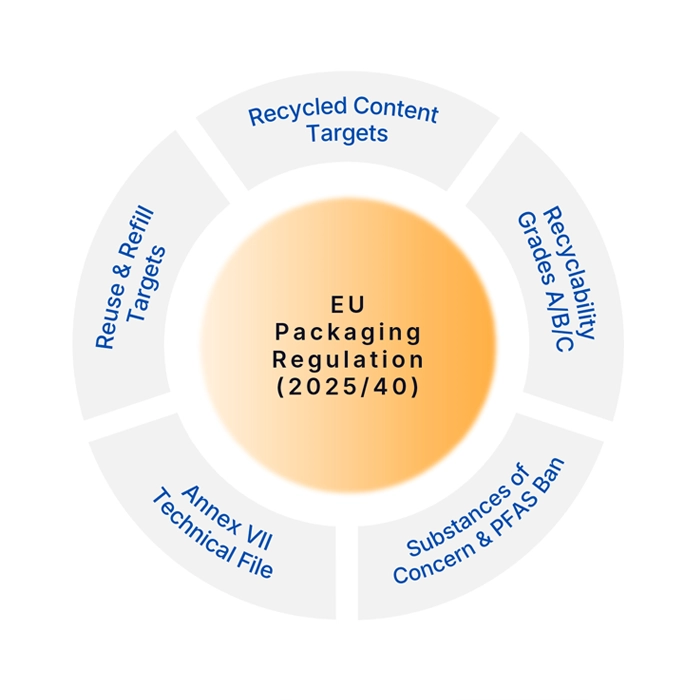
EU PPWR in der Praxis
Herausforderung |
CDX Vorteil |
|
|---|---|---|
| Stoffdaten werden manuell von einzelnen Lieferanten eingeholt, ohne zentrale Übersicht über Datenlücken oder den Bearbeitungsstatus | Lieferantenerklärungen werden in einem zentralen Arbeitsbereich verwaltet, mit Transparenz über Verpackungen, für die noch Stoffinformationen fehlen | |
| Keine Möglichkeit zu prüfen, ob Stoffe in Verpackungsmaterialien auf SoC-, SVHC- oder REACH-Kandidatenlisten aufgeführt sind | Automatisiertes Screening von Stoffen gegen regulatorische Listen zur Identifikation von SoC-, SVHC- und anderen eingeschränkten Stoffen auf Basis vorhandener Materialdeklarationen | |
| Compliance-Nachweise wie Prüfberichte, Zertifikate und Erklärungen sind über E-Mail-Postfächer und gemeinsame Laufwerke verteilt | Compliance-Dokumente werden direkt mit Verpackungen und Lieferantendatensätzen verknüpft und sind jederzeit nachvollziehbar verfügbar | |
| Die Kommunikation mit Lieferanten erfolgt per E-Mail ohne nachvollziehbaren Audit-Trail und mit niedrigen Rücklaufquoten | Strukturierte Lieferantenanfragen und Erinnerungsworkflows mit grundlegender Rückverfolgbarkeit und Statusüberwachung | |
| Compliance-Daten werden für jede regulatorische Anforderung separat gepflegt, sodass PPWR, REACH, SCIP und RoHS in isolierten Prozessen verwaltet werden | Ein zentraler Datensatz wird für mehrere Regulierungen wiederverwendet und unterstützt gleichzeitig PPWR-, REACH-, RoHS- und Konfliktmineralien-Reporting | |
| Keine strukturierte Grundlage für die technische Dokumentation gemäß Anhang VII, wodurch Auditvorbereitungen zeitaufwendig und uneinheitlich werden | Ein zentrales Dokumentationsrepository unterstützt die effiziente Erstellung und Pflege der technischen Dokumentation gemäß PPWR Anhang VII |
Navigating the EU Packaging
and Packaging Waste
Dieses Whitepaper bietet einen praxisnahen Überblick über die wichtigsten PPWR-Pflichten – von EU-Konformitätserklärungen und technischer Dokumentation bis hin zu Anforderungen an Recyclingfähigkeit und Wiederverwendung – und zeigt, wie der DXC Compliance Data eXchange (CDX) verstreute Lieferantendaten in die belastbare Nachweisbasis für PPWR-Compliance verwandelt.
Mehr erreichen mit CDX
CDX vereinfacht und optimiert die regulatorische Compliance branchenübergreifend - mit einer leistungsstarken Plattform für das Management von Materialdaten. Die Lösung stellt die Einhaltung globaler Vorschriften sicher, verbessert die Transparenz in der Lieferkette und reduziert operationale Risiken.
Umfassende regulatorische Compliance für verschiedene Branchen
- CDX unterstützt die Einhaltung zentraler globaler Vorschriften wie REACH, RoHS, SCIP, PFAS, California Proposition 65, EU POPs, TSCA, die EU Battery Regulation (2023/1542) und viele mehr.
- CDX umfasst relevante Stofflisten wie AD-DSL, HEDSL, GADSL, RISL und die IAEG PFAS-Liste – für branchenspezifische Compliance-Abdeckung.
Effiziente Kommunikation entlang der Lieferkette
- Integrierte Workflows und mehrsprachige Kommunikationstools ermöglichen einen reibungslosen Datenaustausch zwischen Kunden und Lieferanten.
- Kostenfreie Antwortmöglichkeit für Lieferanten auf Materialdatenanfragen – verbessert Datenqualität und Rücklaufquote.
- CDX unterstützt mehrstufige Datenanfragen und Rückverfolgbarkeit – reduziert manuellen Aufwand und sorgt für effizientere Compliance-Prozesse.
Automatisierte Datenerfassung & Wiederverwendbarkeit
- CDX ermöglicht die Wiederverwendung von Daten, indem Materialdeklarationen (MDS) und Lieferantendaten produkts- und kundenübergreifend verknüpft werden.
- Integrierte Import-/Exportfunktionen für standardisierte Formate wie IPC-1752A und IPC-1754 reduzieren Dopplungen und sparen Zeit.
SCIP-Datenbank-Integration
- CDX automatisiert die Erstellung und Einreichung von SCIP-Dossiers und gewährleistet so die Einhaltung der EU Waste Framework Directive Richtlinien.
- Unterstützt die ECHA-API für direkte Übertragungen und verwaltet alle erforderlichen Daten wie besorgniserregende Stoffe, Artikelkennungen und Materialkategorien.
Risiken frühzeitig erkennen und vermeiden
- Hilft, Produktrückrufe zu vermeiden, indem gefährliche und reglementierte Stoffe über den gesamten Produktlebenszyklus hinweg präzise nachverfolgt werden.
- Unterstützt die frühzeitige Erkennung nicht konformer Materialien – reduziert regulatorische Risiken und teure Änderungen in späten Entwicklungsphasen.
Sicherheit & Datenschutz
- Erfüllt höchste Sicherheitsstandards, einschließlich ISO-Zertifizierungen und Cloud-Infrastruktur auf Basis von Oracle-Technologie.
- Gewährleistet sichere Datenspeicherung, kontrollierten Zugriff und die Einhaltung globaler Datenschutzvorgaben.
Einfache Integration in bestehende Systeme
- APIs und Webservices ermöglichen eine nahtlose Anbindung an ERP-, PLM- und andere Unternehmenssysteme.
- Kompatibel mit verschiedenen Datenformaten, darunter IPC, IEC und IMDS – für weniger technischen Aufwand.
Eine Plattform – Zwei leistungsstarke Lösungen

Bleiben Sie mit CDX bei der Materialdatenberichterstattung globalen Vorschriften wie REACH, SCIP und RoHS immer einen Schritt voraus. Sammeln, validieren und teilen Sie Materialdaten mühelos über Ihre gesamte Lieferkette hinweg. Unsere fortschrittlichen Funktionen sorgen für Compliance, Transparenz und eine reibungslose Kommunikation.

Übernehmen Sie die Kontrolle über Ihre Konfliktmineralien-Compliance. Mit unserer Responsible Minerals Reporting Lösung erfüllen Sie die Anforderungen der EU Conflict Minerals Regulation und dem U.S. Dodd-Frank Act. CDX unterstützt Sie bei der Umsetzung Ihrer Sorgfaltspflichten und stärkt nachhaltige Beschaffung entlang der Lieferketten.
EU PPWR: Was Unternehmen jetzt wissen müssen
Was ist die PPWR (Verordnung (EU) 2025/40)?
Die PPWR ersetzt die Richtlinie 94/62/EG, die seit 1994 die europäischen Verpackungsvorschriften geregelt hat, durch eine unmittelbar geltende Verordnung. Eine nationale Umsetzung ist nicht mehr erforderlich, und es gibt keine nationalen Abweichungen. Die gleichen verbindlichen Anforderungen gelten von Beginn an in allen 27 EU-Mitgliedstaaten.
Unter der bisherigen Richtlinie erließ jeder Mitgliedstaat eigene nationale Vorschriften. Unternehmen, die Produkte EU-weit vermarkteten, mussten deshalb bis zu 27 unterschiedliche Compliance-Programme verwalten. Gleichzeitig waren viele Anforderungen unpräzise formuliert und die Durchsetzung uneinheitlich. Dennoch machten Verpackungsabfälle weiterhin rund 36 % des kommunalen Abfallaufkommens in der EU aus, sodass die bisherigen Regelungen das Wachstum der Verpackungsmengen nicht wirksam begrenzen konnten.
Die PPWR verändert diesen Ansatz grundlegend. Sie führt klare und messbare Anforderungen ein, darunter konkrete Grenzwerte, Prozentsätze und Umsetzungsfristen. Zusätzlich werden eine verpflichtende technische Dokumentation gemäß Anhang VII sowie eine EU-Konformitätserklärung vorgeschrieben. Es reicht nicht mehr aus, die Anforderungen einzuhalten – Unternehmen müssen ihre Konformität jederzeit nachweisen können.
Besonders wichtig: Industrie- und B2B-Verpackungen fallen nun vollständig in den Anwendungsbereich der Verordnung. Wer Automobilteile, Maschinen oder andere Industriegüter versendet, muss auch für die verwendeten Transportverpackungen die PPWR-Anforderungen erfüllen. Ausnahmen gibt es nicht.
Worin unterscheidet sich die PPWR von der bisherigen EU-Verpackungsrichtlinie?
Die Richtlinie 94/62/EG erforderte eine nationale Umsetzung durch die einzelnen EU-Mitgliedstaaten. Dadurch entstanden 27 unterschiedliche nationale Regelwerke. Industrie- und B2B-Verpackungen waren weitgehend ausgenommen, viele Anforderungen waren unpräzise formuliert und eine verpflichtende technische Dokumentation existierte nicht.
Die Verordnung (EU) 2025/40 ersetzt dieses System durch ein einheitliches, unmittelbar geltendes Gesetz für alle 27 EU-Mitgliedstaaten. Eine nationale Umsetzung ist nicht mehr erforderlich. Die gleichen präzisen und messbaren Anforderungen gelten überall von Beginn an. Industrie- und B2B-Verpackungen fallen vollständig in den Anwendungsbereich der Verordnung. Zudem sind eine verpflichtende technische Dokumentation gemäß Anhang VII sowie eine EU-Konformitätserklärung erforderlich.
Was sind die wichtigsten Anforderungen zur Einhaltung der PPWR?
Die PPWR führt eine Reihe wesentlicher Verpflichtungen ein, die Unternehmen verstehen, dokumentieren und entlang des gesamten Verpackungslebenszyklus nachweisen müssen. Dazu gehören unter anderem Stoffbeschränkungen, Anforderungen an die Recyclingfähigkeit, Rezyklatanteile, Kennzeichnungspflichten, technische Dokumentationen sowie die Erweiterte Herstellerverantwortung (Extended Producer Responsibility, EPR).
Die nachfolgende Übersicht fasst einige der wichtigsten PPWR-Anforderungen und relevanten Fristen zusammen. Sie dient als praktische Orientierungshilfe und stellt keine vollständige Auslegung der Verordnung (EU) 2025/40 dar. Abhängig von Verpackungsart, Markt und Rolle innerhalb der Lieferkette können weitere Anforderungen gelten, die ebenfalls berücksichtigt werden müssen.
|
Artikel 5 | Ab 12. August 2026 Welche Anforderungen stellt die PPWR an besonders besorgniserregende Stoffe und Schwermetalle?Schwermetalle (Pb, Cd, Hg, Cr⁶⁺) dürfen in Verpackungen einen Gesamtgehalt von 100 mg/kg nicht überschreiten. Alle Verpackungen müssen so hergestellt werden, dass besonders besorgniserregende Stoffe (Substances of Concern, SoC) minimiert werden. Der SoC-Begriff umfasst rund 3.250 Stoffeinträge aus CLP-Gefahrenklassen, REACH-SVHCs, EU-POPs sowie Stoffe, die die Recyclingfähigkeit beeinträchtigen können. |
Artikel 5, Lebensmittelkontakt | Ab 12. August 2026 Welche PFAS-Grenzwerte schreibt die PPWR für Lebensmittelverpackungen vor?Für PFAS in Verpackungen mit Lebensmittelkontakt gelten spezifische Konzentrationsgrenzwerte: ≤25 ppb für einzelne nicht-polymere PFAS, ≤250 ppb für die Summe gezielt analysierter PFAS und ≤50 ppm Gesamtfluor. Diese Grenzwerte gelten unabhängig davon, ob PFAS absichtlich zugesetzt wurden oder unbeabsichtigt vorhanden sind. |
|
Artikel 6 | Ab Januar 2030 Was bedeuten die PPWR-Recyclingfähigkeitsklassen A, B und C?Alle Verpackungen müssen recyclingfähig sein. Die Recyclingfähigkeit wird in die Klassen A (≥95 %), B (≥80 %) und C (≥70 %) eingeteilt. Ab 2030 ist Klasse C die Mindestanforderung für das Inverkehrbringen. Ab 2038 dürfen nur noch Verpackungen der Klassen A oder B auf dem EU-Markt bereitgestellt werden. |
Artikel 7 | Ab Januar 2030 Welchen Rezyklatanteil verlangt die PPWR für Kunststoffverpackungen?Kunststoffverpackungen müssen Mindestanteile an recyceltem Material enthalten: 30 % für PET-Verpackungen mit Lebensmittelkontakt und Einweg-Getränkeflaschen, 35 % für sonstige Kunststoffverpackungen und 10 % für nicht-PET-Kunststoffverpackungen mit Lebensmittelkontakt. Diese Zielwerte erhöhen sich bis 2040 ungefähr auf das Doppelte. Die Berechnung erfolgt als jährlicher Durchschnitt pro Produktionsstandort. |
|
Artikel 10 & 24 | Ab Januar 2030 Was besagt die PPWR-Regel zum maximalen Leerraum von 50 %?Verpackungen müssen hinsichtlich Gewicht und Volumen auf das notwendige Minimum reduziert werden. Der Leerraum in Sammel-, Transport- und E-Commerce-Verpackungen darf 50 % des Gesamtvolumens nicht überschreiten. Luftpolsterfolie, Papierfüllmaterial und Luftkissen gelten dabei als Leerraum. |
Artikel 12 | Ab August 2028 Welche Kennzeichnungs- und QR-Code-Anforderungen führt die PPWR ein?Verkaufs- und E-Commerce-Verpackungen müssen mit einem harmonisierten EU-Sortierpiktogramm sowie einem digitalen Datenträger (QR-Code) gekennzeichnet werden, der Informationen zur Materialzusammensetzung, zu SoC-Daten und zu Entsorgungshinweisen bereitstellt. Transport- und B2B-Verpackungen sind davon ausgenommen, die Ausnahme muss jedoch im technischen Dossier gemäß Anhang VII dokumentiert werden. |
|
Artikel 38–39 | Ab 12. August 2026 Welche Dokumentation verlangt die PPWR?Hersteller müssen eine technische Dokumentation gemäß Anhang VII erstellen, die Verpackungsdesign, Materialien, angewandte Normen und Prüfberichte umfasst. Anschließend ist eine EU-Konformitätserklärung auszustellen. Die Aufbewahrungsfrist beträgt 5 Jahre für Einwegverpackungen und 10 Jahre für wiederverwendbare Verpackungen. |
Artikel 44 | Ab 12. August 2026 Welche Anforderungen zur Erweiterten Herstellerverantwortung (EPR) enthält die PPWR?Hersteller bzw. Erstinverkehrbringer (einschließlich Produzenten, Importeuren oder Vertreibern, die verpackte Produkte erstmals auf den Markt bringen) müssen sich in jedem EU-Mitgliedstaat registrieren, jährlich Verpackungsmengen und Recyclingleistungen melden sowie die Kosten für Sammlung, Verwertung und Entsorgung am Ende des Lebenszyklus finanzieren. |
Wer ist für die Einhaltung der PPWR verantwortlich?
Unter der PPWR unterscheiden sich die Pflichten je nach Rolle innerhalb der Lieferkette. Ein Unternehmen kann gleichzeitig mehrere Rollen einnehmen, wobei jede Rolle unterschiedliche rechtliche Anforderungen mit sich bringt.
|
Artikel 15 Der HerstellerStellt die Einhaltung der technischen Anforderungen der PPWR sicher. Erstellt die technische Dokumentation gemäß Anhang VII. Stellt die EU-Konformitätserklärung aus. Trägt die alleinige rechtliche Verantwortung für die Konformitätsbewertung, auch wenn die zugrunde liegenden Daten von Lieferanten bereitgestellt werden. Diese Rolle gilt für jede Organisation, die Verpackungen unter eigenem Namen oder eigener Marke auf dem EU-Markt bereitstellt – unabhängig davon, wer die Verpackung tatsächlich produziert hat. |
Artikel 18 Der ImporteurMuss vor dem Inverkehrbringen von Verpackungen prüfen, ob die erforderliche Dokumentation vorhanden ist. Die Unterlagen müssen während der vorgeschriebenen Aufbewahrungsfrist (5 bzw. 10 Jahre) verfügbar gehalten werden. Verpackungen dürfen nicht auf dem Markt bereitgestellt werden, wenn sie die geltenden Anforderungen nicht erfüllen. |
|
Artikel 19 Der HändlerMuss prüfen, dass die relevanten Verpflichtungen erfüllt wurden, und mit der gebotenen Sorgfalt handeln, bevor Verpackungen auf dem Markt bereitgestellt werden. Händler sind dafür verantwortlich zu bestätigen, dass die erforderliche Dokumentation existiert – auch wenn sie nicht an der Entwicklung, Herstellung oder dem Import der Verpackung beteiligt waren. |
Artikel 16 Der LieferantMuss dem Hersteller alle Informationen und Unterlagen zur Verfügung stellen, die erforderlich sind, um die Konformität mit den geltenden PPWR-Anforderungen nachzuweisen. Dazu gehören Stoffdaten, Materialdeklarationen, Prüfberichte und weitere technische Informationen zu den gelieferten Verpackungsmaterialien und Verpackungskomponenten. |
Wer gilt nach der PPWR rechtlich als „Hersteller“?
Nach Artikel 15 ist ein Hersteller jede in der EU oder außerhalb der EU ansässige Organisation, die Verpackungen unter ihrem eigenen Namen oder ihrer eigenen Marke auf dem Markt bereitstellt.
Entscheidend ist: Wenn Sie Verpackungen von einem Drittanbieter beziehen und diese unter Ihrer eigenen Marke vertreiben, gelten Sie rechtlich als Hersteller. In diesem Fall tragen Sie die volle Verantwortung für die Konformitätsbewertung, die Erstellung der technischen Dokumentation gemäß Anhang VII sowie die Ausstellung der EU-Konformitätserklärung.
Der tatsächliche Produzent der Verpackung ist in diesem Szenario nicht der rechtliche Hersteller im Sinne der PPWR.
Gelten die PFAS- und BPA-Beschränkungen der PPWR für alle Verpackungen?
Nein. Das BPA-Verbot (Verordnung (EU) 2024/3190) und die PFAS-Konzentrationsgrenzwerte gemäß Artikel 5 Absatz 5 der PPWR gelten speziell für Verpackungen mit Lebensmittelkontakt.
Für Verpackungen ohne Lebensmittelkontakt gilt stattdessen die allgemeine Anforderung, besonders besorgniserregende Stoffe (Substances of Concern, SoC) zu minimieren. Dies umfasst unter anderem Schwermetalle, deren Gesamtgehalt 100 mg/kg nicht überschreiten darf, und gilt für alle Verpackungsarten.
Wenn Ihre Kunden keine Verpackungen für den Lebensmittelkontakt herstellen, finden die spezifischen PFAS- und BPA-Anforderungen aus Artikel 5 Absatz 5 grundsätzlich keine direkte Anwendung auf Ihren Produktbereich. Die allgemeinen Anforderungen zur Minimierung von besonders besorgniserregenden Stoffen müssen jedoch weiterhin eingehalten werden.
Was ist ein „Substance of Concern“ (SoC) im Sinne der PPWR?
Die PPWR übernimmt die Definition von „Substances of Concern“ (SoC) aus der Ökodesign-Verordnung für nachhaltige Produkte (ESPR).
Der Begriff umfasst etwa 3.250 Stoffe und Stoffgruppen in vier Kategorien:
- Rund 3.250 harmonisierte Gefahreneinstufungen gemäß CLP-Verordnung, darunter krebserzeugende, mutagene und reproduktionstoxische Stoffe (CMR-Stoffe), endokrine Disruptoren sowie umweltgefährliche Stoffe.
- 253 besonders besorgniserregende Stoffe (SVHCs) aus der REACH-Kandidatenliste.
- 34 persistente organische Schadstoffe (POPs), die auf EU-Ebene reguliert sind.
- Eine „offene Liste“ von Stoffen, die die Recyclingfähigkeit von Verpackungen negativ beeinflussen. Diese Stoffe werden künftig durch delegierte Rechtsakte näher definiert.
Wichtig ist, dass der SoC-Begriff deutlich weiter gefasst ist als die REACH-SVHC-Liste. SVHCs stellen lediglich eine von vier SoC-Kategorien dar. Unternehmen, die sich ausschließlich auf die REACH-Kandidatenliste konzentrieren, erfassen daher nicht den vollständigen Umfang der PPWR-Anforderungen.
Benötigt die PPWR Sortierkennzeichnungen und QR-Codes für Transport- und B2B-Verpackungen?
Nein. Transport- und industrielle B2B-Verpackungen sind von der Pflicht zur Anbringung des harmonisierten Sortierpiktogramms und des QR-Codes ausgenommen.
Für E-Commerce-Verpackungen gilt diese Ausnahme jedoch nicht. Auch wenn eine Verpackung physisch als Transportverpackung dient, unterliegt sie den Kennzeichnungspflichten, wenn sie Produkte über einen Online-Vertriebskanal direkt an Endverbraucher liefert.
Wichtig ist, dass die Ausnahme nicht automatisch gilt. Unternehmen müssen ihre Verpackungskategorien formell bewerten und die Grundlage für jede geltend gemachte Ausnahme in der technischen Dokumentation gemäß Anhang VII dokumentieren. Diese Verpflichtung gilt bereits ab dem 12. August 2026.
Was besagt die „5 %-Kunststoffregel“ der PPWR und warum ist sie wichtig?
Gemäß Artikel 7 Absatz 1 gilt eine Verpackung nicht als Kunststoffverpackung im Sinne der entsprechenden PPWR-Vorgaben, wenn Kunststoff weniger als 5 % des Gesamtgewichts der Verpackung ausmacht. In diesem Fall ist sie von bestimmten Regelungen für Einwegkunststoffverpackungen ausgenommen.
Wird der Kunststoffanteil jedoch auf 5 % oder mehr erhöht – selbst nur geringfügig –, wird die gesamte Verpackung rechtlich als Kunststoffverpackung eingestuft, unabhängig davon, aus welchem Material sie überwiegend besteht.
Ein typisches Beispiel ist eine Papierverpackung mit einer dünnen Kunststoffbeschichtung zum Feuchtigkeitsschutz. Erreicht diese Kunststoffschicht 5 % des Gesamtgewichts der Verpackung, wird die Verpackung rechtlich als Kunststoffverpackung behandelt.
Wichtig: Etiketten, Lacke, Druckfarben und Klebstoffe werden bei dieser Berechnung nicht berücksichtigt.
Wie lange müssen PPWR-Compliance-Dokumente aufbewahrt werden?
Die technische Dokumentation gemäß Anhang VII sowie die EU-Konformitätserklärung müssen aufbewahrt werden:
- mindestens 5 Jahre für Einwegverpackungen,
- mindestens 10 Jahre für wiederverwendbare Verpackungen.
Die Aufbewahrungsfrist beginnt ab dem Zeitpunkt, zu dem die betreffende Verpackung letztmalig auf dem Markt bereitgestellt wird.
Hersteller müssen die Dokumentation zudem regelmäßig überprüfen und aktualisieren, insbesondere wenn sich das Verpackungsdesign ändert oder neue beziehungsweise aktualisierte Normen und technische Anforderungen Anwendung finden.
Wie sieht der Zeitplan für die Einhaltung der PPWR aus?
Die Anforderungen der PPWR treten schrittweise in Kraft und nicht alle gleichzeitig. Für eine effektive Planung ist es wichtig zu verstehen, welche Frist für welche Anforderung gilt. Die nachstehenden Termine sind wichtige Beispiele und stellen keine vollständige Übersicht aller Fristen dar.
PPWR Compliance News & CDX Updates

Up to date mit CDX. Regulatorische Neuigkeiten und Insights per Newsletter.
Explore the Regulatory Landscape

Nutzen Sie CDX, um besorgniserregende Stoffe zu melden und die Anforderungen der EU-SCIP-Datenbank zu erfüllen.

CDX unterstützt Sie bei der Verwaltung und Dokumentation chemischer Stoffe entlang Ihrer Lieferkette – für eine sichere REACH-Compliance.

Verfolgen und begrenzen Sie gefährliche Stoffe in Elektro- und Elektronikgeräten effizient mit CDX.

CDX hilft Ihnen, PFAS-Stoffe zu identifizieren, zu bewerten und zu steuern - im Einklang mit weltweiten Vorgaben.

CDX unterstützt Sie bei der Erkennung und Verwaltung von Chemikalien, die unter Californias Proposition 65 gelistet sind.

Verwalten Sie Persistent Organic Pollutants (POPs) in Ihren Produkten mit CDX – für den Schutz von Umwelt und Gesundheit.
Optimieren Sie Ihre Compliance. Bleiben Sie regelkonform und wettbewerbsfähig in einem dynamischen Markt.
cdx-servicedesk@dxc.com.
Stellen Sie mir eine Frage oder wählen Sie eine der folgenden Optionen: